
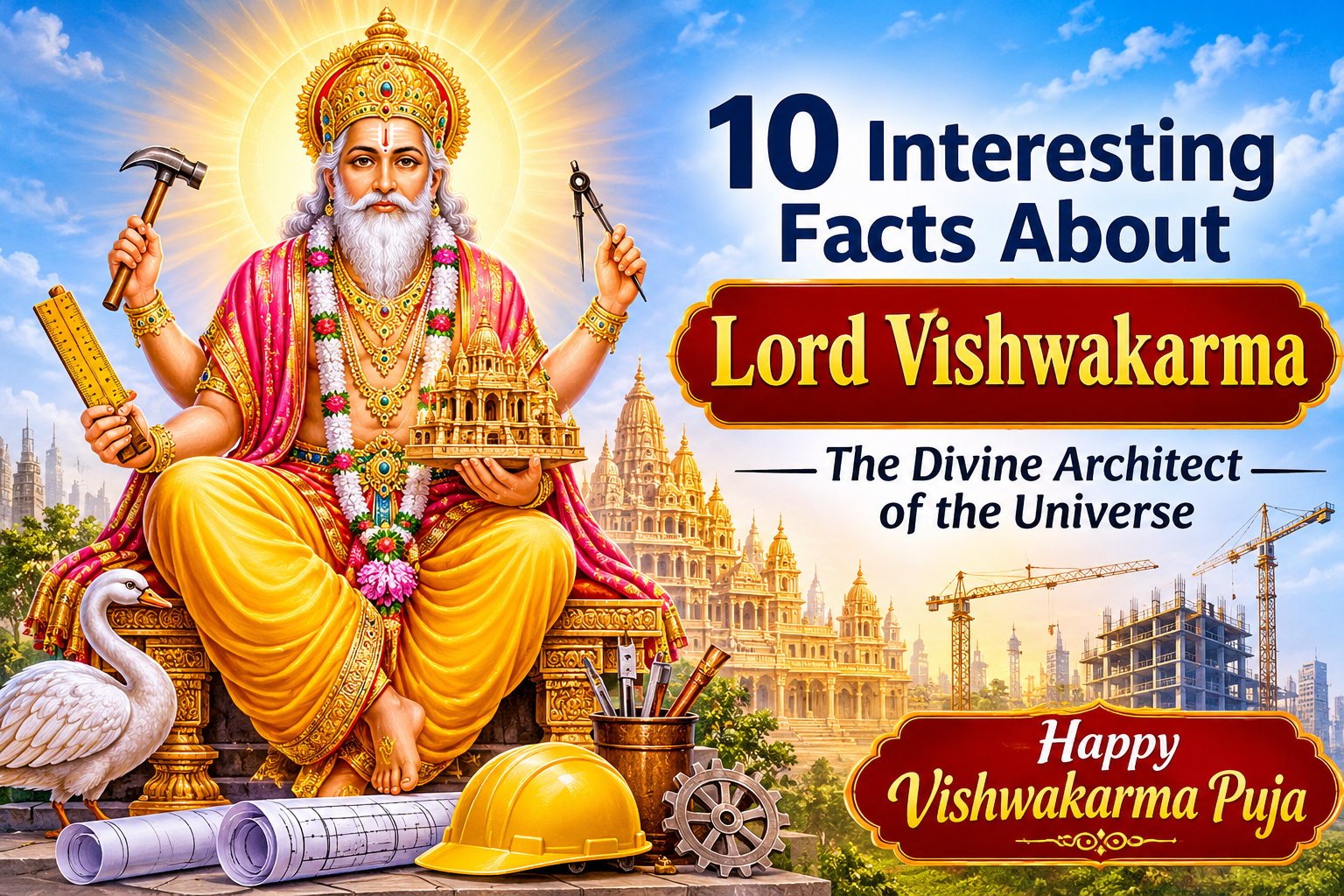
India has a rich cultural heritage filled with stories of gods, traditions, art, and architecture. Among the many revered deities in Hindu mythology, Lord Vishwakarma holds a special place as the divine architect and creator of extraordinary structures, weapons, and celestial objects.
Celebrated as the God of Architecture, Engineering, and Craftsmanship, Lord Vishwakarma represents creativity, innovation, technical skills, and dedication to work. Vishwakarma Puja is celebrated with great devotion by engineers, artisans, mechanics, factory workers, craftsmen, and people associated with various industries.
On the occasion of Vishwakarma Day, let's explore 10 interesting facts about Lord Vishwakarma that highlight his importance in Hindu mythology and Indian culture.
Lord Vishwakarma is traditionally regarded as the divine architect of the universe. According to Hindu mythology, he possesses extraordinary knowledge of architecture, engineering, construction, and craftsmanship. He is believed to have created magnificent structures and divine objects for the gods.
According to Hindu traditions, Lord Vishwakarma is credited with constructing the magnificent heavenly abode of Lord Indra, known as Swarg Lok. Its beauty and grandeur reflect his extraordinary architectural skills and divine creativity.
One of the most fascinating stories associated with Lord Vishwakarma is the construction of the legendary city of Dwarka for Lord Krishna. The city is described in Hindu scriptures as a magnificent place filled with beautiful palaces, impressive structures, and remarkable architectural designs.
Lord Vishwakarma is also associated with the creation of powerful divine weapons. One famous example is the Vajra, the thunderbolt weapon of Lord Indra, which is traditionally described as being made from the bones of Sage Dadhichi.
Lord Vishwakarma is not just a religious figure; he also represents the spirit of innovation, technical knowledge, and problem-solving. His stories inspire engineers, architects, designers, mechanics, and craftsmen to develop their skills and create something meaningful.
Vishwakarma Puja is especially important for people working in factories, workshops, construction, manufacturing, automobile industries, and engineering sectors. Workers worship their tools, machines, vehicles, and equipment to express gratitude and seek blessings for safety, productivity, and success.
According to popular Hindu traditions, Lord Vishwakarma is credited with designing and constructing the golden city of Lanka. Its magnificent palaces and golden architecture are often described as examples of his exceptional craftsmanship.
The name Vishwakarma is commonly understood as referring to the creator or maker of the universe. It reflects the idea of building, designing, and creating something extraordinary through knowledge, imagination, and skill.
Vishwakarma Puja is not only about religious worship but also about respecting the tools and machines that make our daily work possible. On this day, workplaces, factories, offices, and workshops are decorated, and machinery and equipment are worshipped as a symbol of gratitude.
Even in today's world of artificial intelligence, robotics, automation, and advanced technology, the values associated with Lord Vishwakarma remain relevant. His stories remind us that creativity, technical knowledge, craftsmanship, and continuous innovation are essential for progress.
Lord Vishwakarma represents the power of creativity, engineering, craftsmanship, and innovation. His contribution in Hindu mythology reminds us of the importance of building, designing, and creating things that make life better.
Vishwakarma Day is an opportunity to appreciate the hard work of engineers, artisans, technicians, industrial workers, and everyone who contributes to society through their skills and dedication.
Let us celebrate the spirit of innovation, honour the hands behind every creation, and take inspiration from the divine architect of the universe.
Happy Vishwakarma Puja! May Lord Vishwakarma bless everyone with creativity, knowledge, prosperity, and success.